
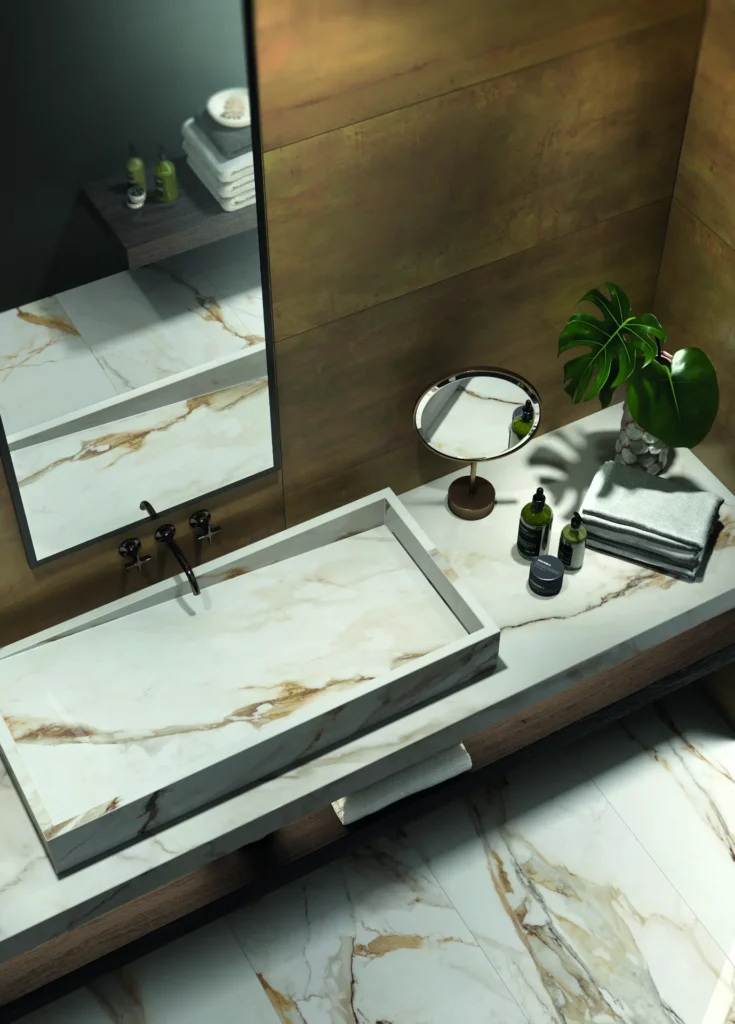
There’s something quietly reliable about a porcelain bathroom sink. It’s there for the first groggy splash of water in the morning. It’s there for the rushed hand wash before dinner. It’s there, decade after decade, doing its job without complaint.
While the home design world cycles through trends and “revolutionary” materials every few years, porcelain just keeps showing up. And there’s a reason for that. Actually, there are several.
This guide will walk you through everything worth knowing about porcelain bathroom sinks. Why they’ve earned their reputation. How they compare to ceramic (spoiler: they’re not the same thing). What styles exist and which one fits your space. And how to pair a porcelain sink with a natural stone countertop that makes your bathroom feel genuinely special.
Porcelain vs. Ceramic: They’re Not the Same Thing
This trips up almost everyone, and honestly, it’s understandable. Both materials start as clay. Both end up glazed and shiny. But the journey between those two points makes all the difference.
What Happens in the Kiln Changes Everything
The secret is heat. Porcelain uses a more refined, purified clay that gets fired at significantly higher temperatures, typically between 1,200 and 1,400°F. According to Angi’s comparison guide, this intense heat transforms the clay into something denser and less porous than standard ceramic.
That might sound like technical trivia. It’s not.
Why Density Matters in Your Bathroom
Less porosity means moisture can’t penetrate the surface as easily. Stains have nowhere to go. The material resists scratches better. Your sink keeps its lustrous finish through years of daily use instead of slowly degrading.
Ceramic works fine for plenty of applications. But in a bathroom, where water, soap residue, toothpaste, and occasional dropped objects are daily realities, porcelain’s density becomes a genuine advantage.
The Honest Case for Porcelain Bathroom Sinks
Every material has trade-offs. Here’s the balanced picture.
What Makes Porcelain Worth Choosing
It lasts generations, not just years. A quality porcelain sink can serve your bathroom for 50 to 100 years with proper care. That’s not marketing language. That’s why you see original porcelain fixtures in century-old homes still looking respectable.
Cleaning is almost too easy. The non-porous surface doesn’t let grime settle in. Most days, a damp cloth handles everything. No special products. No scrubbing. No stress.
The aesthetic never dates. Trends come and go. White porcelain just keeps working. It looked appropriate in 1920s bathrooms. It looks appropriate now. It’ll look appropriate when whatever’s trendy today feels embarrassingly dated.
The price makes sense. Despite performing like a premium material, porcelain typically costs less than natural stone or metal sinks. You get longevity without the luxury price tag.
What You Should Know Going In
Heavy impacts can cause damage. Porcelain is durable, not indestructible. As TrueForm Concrete notes, dropping something heavy and sharp can chip or crack the surface. It happens rarely, but it happens.
Color options are limited. The vast majority of porcelain sinks come in white or off-white. If you’re dreaming of bold colors or unusual finishes, you’ll need to look elsewhere. For most bathrooms, though, white works perfectly as a neutral foundation.
Sink Styles: Finding Your Fit
Porcelain’s versatility shows in the range of installation styles available. Each creates a different look and serves different practical needs.
Undermount Sinks
Installed beneath the countertop, undermount sinks create a seamless transition from counter to basin. No rim interrupting the surface. No lip catching debris.
The practical benefit goes beyond aesthetics. You can wipe spills directly into the sink without navigating around edges. For natural stone countertops especially, this style showcases the material beautifully while making cleanup effortless.
If you’re investing in quality countertops, undermount is usually the right call.
Vessel Sinks
These sit on top of the counter like decorative bowls, creating immediate visual drama. A vessel sink announces itself. It’s a statement piece.
This style works particularly well in powder rooms or master baths where you want impact. In a small guest bathroom, a striking vessel sink can be the only design element you need.
Drop-In and Pedestal Options
Drop-in sinks (sometimes called top-mount) are the most traditional approach. A visible rim rests on the countertop surface. Installation is straightforward, replacement is simple.
Pedestal sinks stand on their own, supported by a column base. They’re classic, space-efficient, and ideal for smaller bathrooms where storage isn’t the priority. There’s a reason they’ve never gone out of style in powder rooms.
Pairing Porcelain with Natural Stone Countertops
Here’s where things get interesting. A white porcelain sink is essentially a blank canvas. It doesn’t compete for attention. It creates space for something else to shine.
That something else? A natural stone countertop.
Marble: Undeniable Luxury
The combination of white porcelain and beautifully veined marble is timeless for a reason. The soft, elegant patterns of marble create sophistication that photographs well and lives even better.
This pairing works in traditional spaces and modern ones. It elevates without trying too hard. If classic luxury is the goal, this is the path.
Quartzite: Marble’s Tougher Cousin
Love the marble aesthetic but need something more resilient? Quartzite delivers similar beauty with significantly more strength.
A porcelain undermount sink paired with quartzite creates a bathroom that handles real life without sacrificing elegance. For busy family bathrooms that still need to look good, this combination makes sense.
Granite: Variety That Performs
Granite offers something the others can’t: endless variety. Colors range from subtle neutrals to dramatic exotics. Patterns vary from uniform to wildly unique.
A simple porcelain sink lets whatever granite you choose take center stage. Whether you want understated or bold, granite accommodates, and porcelain supports.
Keeping Your Porcelain Sink Beautiful
One of porcelain’s best features is how little it asks from you. Maintenance is genuinely simple.
The Daily Routine
According to The Spruce’s cleaning guide, all you really need is a soft cloth, warm water, and gentle dish soap. Wipe the sink dry after use to prevent water spots and mineral buildup. A quick weekly cleaning keeps everything fresh.
That’s it. No special products. No complicated routines.
What to Avoid
Protecting that glossy finish means steering clear of certain cleaners. Scouring powders scratch. Steel wool damages. Acidic cleaners like vinegar can dull the surface over time.
Stick with gentle products and soft materials. Your sink will thank you by looking new for decades.
Why Porcelain Endures
In a market constantly chasing the next material innovation, porcelain’s continued dominance says something. It works. It lasts. It looks good without demanding attention or maintenance.
A porcelain sink won’t be the most exciting part of your bathroom. That’s actually the point. It’s the reliable foundation that lets everything else, especially a stunning natural stone countertop, shine.
The combination of practical performance and timeless aesthetics makes porcelain the right choice for most bathrooms, whether you’re building a busy family space or a luxurious master retreat.
Ready to see how natural stone can transform your bathroom? Contact Elements Room to explore the options and find the right surface for your project.