
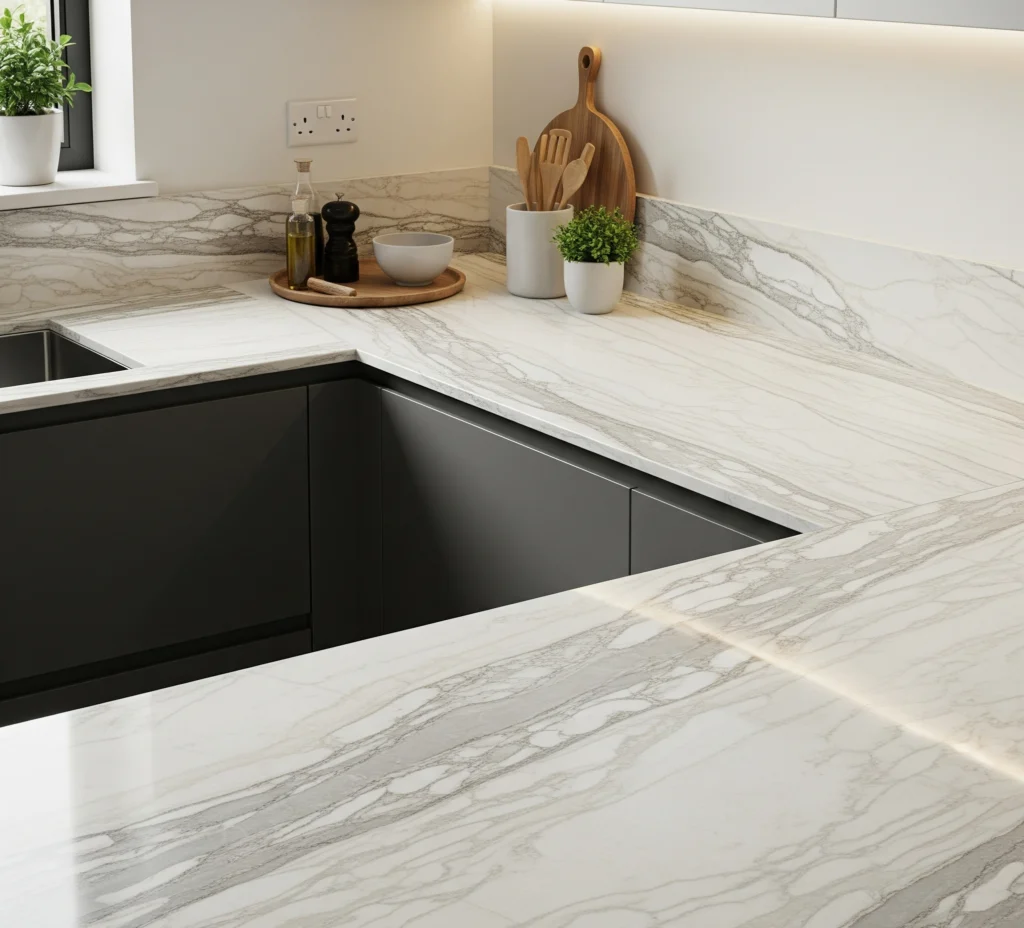
You fell in love with marble the first time you saw it. The veining. The soft tones. That unmistakable elegance that makes a kitchen feel like somewhere special. But then you did your research.
Marble stains. Marble etches from lemon juice and wine. Marble demands constant vigilance. Suddenly that dream countertop started feeling like a high-maintenance relationship you weren’t sure you wanted.
So you looked at granite and quartz. Practical. Durable. But something was missing. They just didn’t have that refined, one-of-a-kind character that made you fall for marble in the first place.
What if you didn’t have to choose?
Dolomite is capturing attention from homeowners and designers who refuse to sacrifice beauty for practicality. It offers marble’s aesthetic appeal with improved durability. But here’s the honest truth: it’s not magic. It still requires commitment. The question is whether that commitment makes sense for your kitchen and your life.
Let’s find out.
What Exactly Is Dolomite?
Dolomite is a natural sedimentary rock composed primarily of calcium magnesium carbonate. Geologically speaking, it’s found abundantly worldwide, with the most famous deposits in the Italian Dolomite Alps that gave the stone its name.
Visually, dolomite looks remarkably like marble. Soft white and gray tones with subtle, cloudy veining patterns. This similarity isn’t coincidence — they’re geological cousins, both formed from carbonate minerals. But dolomite’s composition makes it slightly harder and more resistant to certain types of damage.
What makes dolomite particularly appealing is its uniqueness. Each slab is genuinely one-of-a-kind, with natural variations in color and veining that ensure your countertops will be distinctly yours. Popular varieties include Bianco Dolomiti (pure white with subtle veining), Dolce Vita (white with gray accents), and Fantasy Brown (warm earth tones with dramatic veining).
If you’re the kind of person who wants your kitchen to have personality and character rather than looking like everyone else’s, dolomite delivers that.
Is Dolomite Actually Good for Kitchens?
This is where honesty matters more than salesmanship.
The answer depends entirely on your lifestyle, your aesthetic priorities, and your willingness to maintain your surfaces properly.
Dolomite makes sense if:
You prioritize unique, natural beauty over low-maintenance convenience. You’re willing to seal your countertops every 1-2 years and clean up spills promptly. You appreciate marble’s look but want something slightly more forgiving. You entertain frequently and want guests to notice your kitchen’s elegance. You’re designing a bathroom, powder room, or lower-traffic kitchen where durability demands are moderate.
Dolomite probably isn’t for you if:
You want completely maintenance-free countertops. You frequently cook with acidic ingredients like citrus, vinegar, and wine, and you’d rather not worry about etching. You have young children or a busy household with heavy countertop use. You prefer the peace of mind that comes with granite or quartz. You want maximum durability and a 25+ year lifespan without concerns.
The honest truth: dolomite is beautiful but requires commitment. It’s not as forgiving as granite or quartz, nor as demanding as marble. It occupies a sweet spot for homeowners who value aesthetics and are willing to invest in proper care.
How Dolomite Stacks Up Against the Competition
Understanding where dolomite fits among other countertop materials helps clarify whether it’s right for you.
Dolomite vs. Marble
Dolomite is noticeably harder and more durable than marble. While marble rates 3 on the Mohs hardness scale, dolomite rates 4. That might not sound like much, but it’s a meaningful difference in scratch resistance. Dolomite is also less porous, making it more resistant to staining.
However, both materials share a vulnerability to etching from acidic substances. If you’ve rejected marble because of its high-maintenance reputation, dolomite offers modest improvement but not dramatic transformation. Think of it as marble’s more resilient cousin, not a completely different material.
Dolomite vs. Granite
Granite is significantly more durable. It rates 7 on the Mohs scale and is virtually impervious to scratching, etching, and staining. Granite requires sealing every 1-3 years but is otherwise low-maintenance.
The trade-off? Granite’s speckled appearance, while beautiful, lacks the refined elegance of dolomite’s veining. If durability is your primary concern, granite is the superior choice. If aesthetics matter equally, dolomite offers more visual refinement.
Dolomite vs. Quartz
Quartz is engineered from crushed natural quartz combined with resin binders, making it the most durable countertop option. Non-porous, no sealing required, virtually stain-proof and scratch-resistant.
But quartz lacks natural variation and authenticity. Each slab looks similar to others, whereas dolomite offers true uniqueness. Quartz is the practical choice. Dolomite is the artistic choice. Which matters more to you?
Understanding the Mohs Scale
To make sense of durability claims, it helps to understand the Mohs hardness scale, a standard measurement in geology and materials science.
The scale ranges from 1 (softest) to 10 (hardest). Here’s where common countertop materials fall:
Marble: 3 (soft, easily scratched and etched)
Dolomite: 4 (moderately soft, more resistant than marble)
Granite: 7 (hard, highly resistant to scratching)
Quartz: 7-8 (very hard, engineered for durability)
A rating of 4 means dolomite is dense enough to resist moderate scratching and impact, but it’s not bulletproof. Dropping a heavy pot or using a knife directly on the surface can cause damage. This is why cutting boards and trivets are essential, not optional.
Maintenance: What You’re Actually Signing Up For
Proper maintenance keeps dolomite countertops beautiful for years. The good news: it’s straightforward and less demanding than marble, though more involved than granite or quartz.
Sealing
Dolomite needs sealing every 1-2 years, depending on usage and sealant type. Sealing creates a protective barrier against staining and etching. Use high-quality stone sealer specifically formulated for natural stone and follow manufacturer instructions carefully.
Daily Care
Daily maintenance is simple. Wipe countertops with a soft cloth or sponge using warm, soapy water. For tougher cleaning, use a pH-neutral stone cleaner designed for natural stone. Avoid harsh, acidic, or abrasive cleaners that can damage the surface and strip sealant.
The critical habit: wipe up spills immediately, especially acidic spills from citrus, vinegar, or wine. The longer a spill sits, the greater the risk of etching or staining.
What to Avoid
Never use sharp objects directly on dolomite. Always use cutting boards. Don’t place hot pots directly on the surface without trivets — extreme heat can damage the sealant. Avoid dragging heavy cookware across the surface. Don’t use bleach, vinegar-based cleaners, or other acidic products.
Design Possibilities: Where Dolomite Shines
One of dolomite’s greatest strengths is aesthetic versatility. The material offers several color options and design possibilities that make it genuinely exciting to work with.
Color Range
Classic white dolomite features clean, snowy backgrounds with subtle gray veining. This timeless look works beautifully in modern, transitional, and traditional kitchens, brightening spaces and creating airy feels.
Beige and cream varieties offer warmer tones adding coziness and sophistication. These work particularly well with warm wood cabinetry or earth-tone color schemes.
Dark gray dolomite makes bold, contemporary statements. Dramatic coloring creates striking contrast in light-colored kitchens and works beautifully in modern designs.
Unique veining patterns vary by slab. Some feature subtle, feather-like veins for understated elegance. Others display bold, dramatic veining becoming true focal points. This natural variation is part of dolomite’s charm — no two kitchens look identical.
Finish Options
Dolomite typically comes in two finishes: polished and honed.
Polished finishes have glossy, reflective surfaces showcasing colors and veining beautifully. They’re dramatic and eye-catching.
Honed finishes have matte, velvety appearances that feel more understated and contemporary. They’re subtle and sophisticated.
Both finishes are equally durable. The choice is purely aesthetic preference.
Questions People Actually Ask
How often should I seal dolomite countertops?
Every 1-2 years, depending on usage and sealant type. High-traffic kitchens may need more frequent sealing. Follow manufacturer recommendations.
Can dolomite countertops be repaired?
Minor chips and cracks can be fixed using color-matching epoxy. Complex damage, especially at edges or corners, requires professional stone fabricators. Prevention through proper care is always preferable to repair.
Is dolomite heat-resistant?
Yes, naturally heat-resistant and can tolerate hot pots. However, using trivets provides extra protection and is recommended as best practice.
How does maintenance compare to marble?
Similar requirements — regular sealing and prompt spill cleanup — but dolomite is slightly more forgiving due to greater hardness and lower porosity.
Making Your Decision
Dolomite represents a compelling choice for homeowners who refuse to compromise between beauty and practicality. It offers marble’s refined elegance with improved durability, making it excellent for those willing to commit to proper maintenance.
The decision ultimately comes down to priorities. If you value unique, natural beauty and are willing to care for your countertops, dolomite can deliver years of stunning performance. If you prioritize convenience and worry-free durability, granite or quartz may suit you better.
Neither choice is wrong. They’re just different.
Ready to explore dolomite and see how it compares to other materials in person? Schedule a consultation at our North Hollywood or San Antonio showrooms. We’ll help you view actual slabs, discuss your lifestyle and design preferences, and determine whether dolomite is the right choice for your kitchen.