
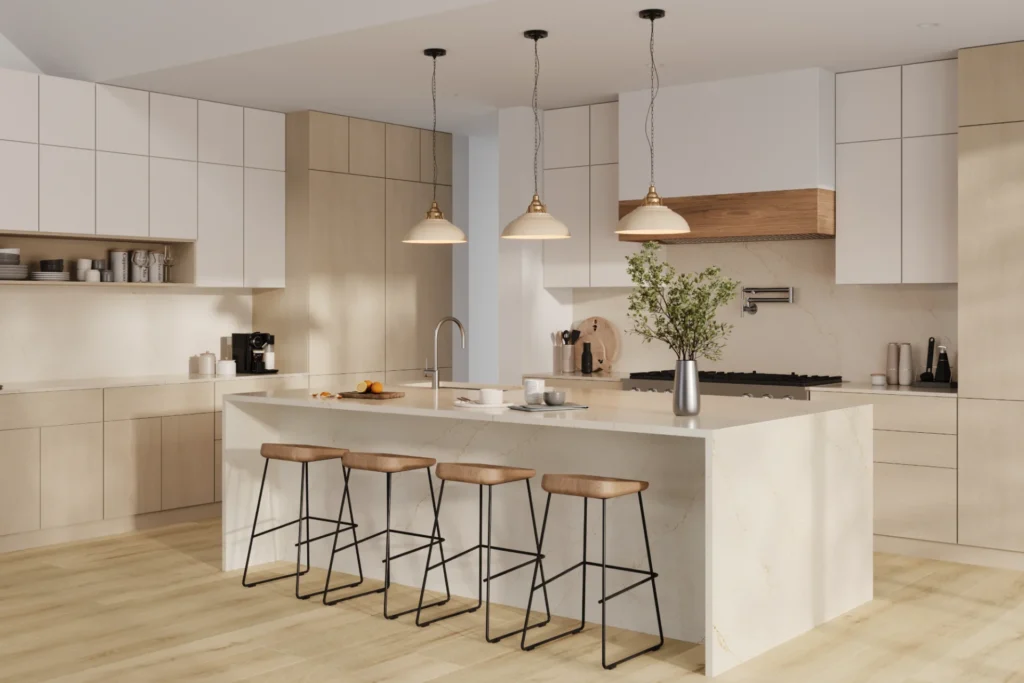
There’s a reason everyone ends up in the kitchen at parties. It’s not the food, exactly. It’s something about the space itself — the warmth, the activity, the feeling that this is where real life happens.
And increasingly, where everyone gathers is the island.
Kitchen islands have evolved from luxury amenity to essential element. According to recent data, 63% of current kitchen remodels include an island addition. That’s not a trend. That’s a fundamental shift in how we think about kitchens and family living.
But here’s what separates a great island from a forgettable one: intention. It’s not just about having extra counter space, though that matters. A well-designed island becomes the physical and emotional center of your kitchen — where family connects over breakfast, where guests congregate while you cook, where the kitchen truly becomes the heart of your home.
Whether you’re planning a complete remodel or simply exploring possibilities, understanding the principles of island design helps you create something you’ll love using every day.
What’s Actually Happening in Island Design Right Now
The kitchen design world is shifting. That sterile, “operating room” aesthetic dominating the 2010s? It’s giving way to warmer, more human-centered spaces.
According to the 2026 Kitchen Trends Report from the National Kitchen & Bath Association, kitchens are evolving toward more intelligent, personalized, and health-conscious spaces.
This has profound implications for island design. Today’s islands aren’t simply prep surfaces with seating. They’re multifunctional hubs integrating technology, wellness features, and sophisticated design elements.
The numbers tell the story: 76% of homeowners expect their kitchen footprint to increase over the next three years, with the island serving as centerpiece of that expansion.
Lighting has emerged as critical. Natural lighting ranks at 95% importance for homeowners, with quality artificial lighting at 93%. This means islands must be thoughtfully positioned and lit for both practical and aesthetic purposes. Pendant lighting above the island has become almost mandatory, transforming the space into an evening entertaining venue.
Beyond functionality, there’s a resurgence of artistry in materials. The trend toward tumbled limestone, mixed-stone mosaics, and textured finishes reflects broader movement away from minimalism toward spaces with character and warmth.
Size and Layout: Finding the Perfect Fit for Your Kitchen
One of the most common mistakes homeowners make: sizing the island wrong. Too large and the kitchen feels cramped. Too small and you wonder why you bothered.
Here’s the practical rule: keep your island under 10% of your kitchen’s total square footage. This ensures enhancement without overwhelm.
For most kitchens, typical islands measure 2 feet wide by 4 feet long. Larger kitchens can accommodate islands extending to 3-4 feet wide and 6 feet long. The key is adequate clearance around all sides.
Clearance matters more than people realize. A minimum of 36 inches between the island and surrounding cabinetry is necessary for basic movement. But 42 to 48 inches is ideal, creating comfortable flow that allows multiple people to work simultaneously without bumping into each other. If your refrigerator or dishwasher doors open toward the island, you’ll need additional space.
Island vs. Peninsula: What’s Best for a Small Kitchen?
Not every kitchen has space for a freestanding island. In these situations, a peninsula — an extension of existing cabinetry attached to a wall — offers an excellent alternative.
A typical peninsula provides seating for up to three people, while islands usually accommodate four. Peninsulas cost less to install and don’t disrupt the kitchen’s work triangle as dramatically. They’re ideal for galley-style kitchens, historical homes with smaller footprints, and any space where a freestanding island would create workflow problems.
However, islands offer superior design flexibility. Because they’re freestanding, islands can contrast with the rest of the kitchen, creating dynamic visual interest. Peninsulas must typically match existing cabinetry, limiting possibilities.
The Countertop Sets the Tone
The material you choose for your island countertop shapes the entire kitchen’s feel. This is where functionality meets aesthetics, and the decision deserves careful thought.
Popular Countertop Materials for Kitchen Islands
The market for kitchen island countertops has expanded significantly, with homeowners choosing from a diverse palette of materials and finishes. Each option brings distinct advantages and aesthetic qualities.
-
Quartz remains the leading choice for luxury islands, offering exceptional durability, non-porous surfaces that resist stains, and minimal maintenance requirements . The engineered stone is available in an extensive range of colors and patterns, from classic neutrals to bold statement shades.
-
Quartzite, a natural stone option, has emerged as a designer favorite for 2026 . Unlike quartz, quartzite is a naturally occurring metamorphic rock that offers unique veining patterns and exceptional durability. Popular quartzite options include Taj Mahal (warm beige with soft grays), Cielo (blue-gray), and Amazon (green with striking white veining) .
-
Marble provides unmatched elegance and luxury, though it requires more frequent maintenance and sealing . Its timeless appeal and distinctive veining patterns make it a choice for homeowners seeking classic sophistication.
-
Granite offers natural beauty and durability, though it’s typically more expensive than quartz and requires regular sealing . Each slab is unique, providing one-of-a-kind aesthetic appeal.
Countertop Color Trends for Islands
The color palette for kitchen countertops in 2026 reflects a shift toward nature-inspired hues and sophisticated neutrals . According to interior designers, several color families are dominating the market:
-
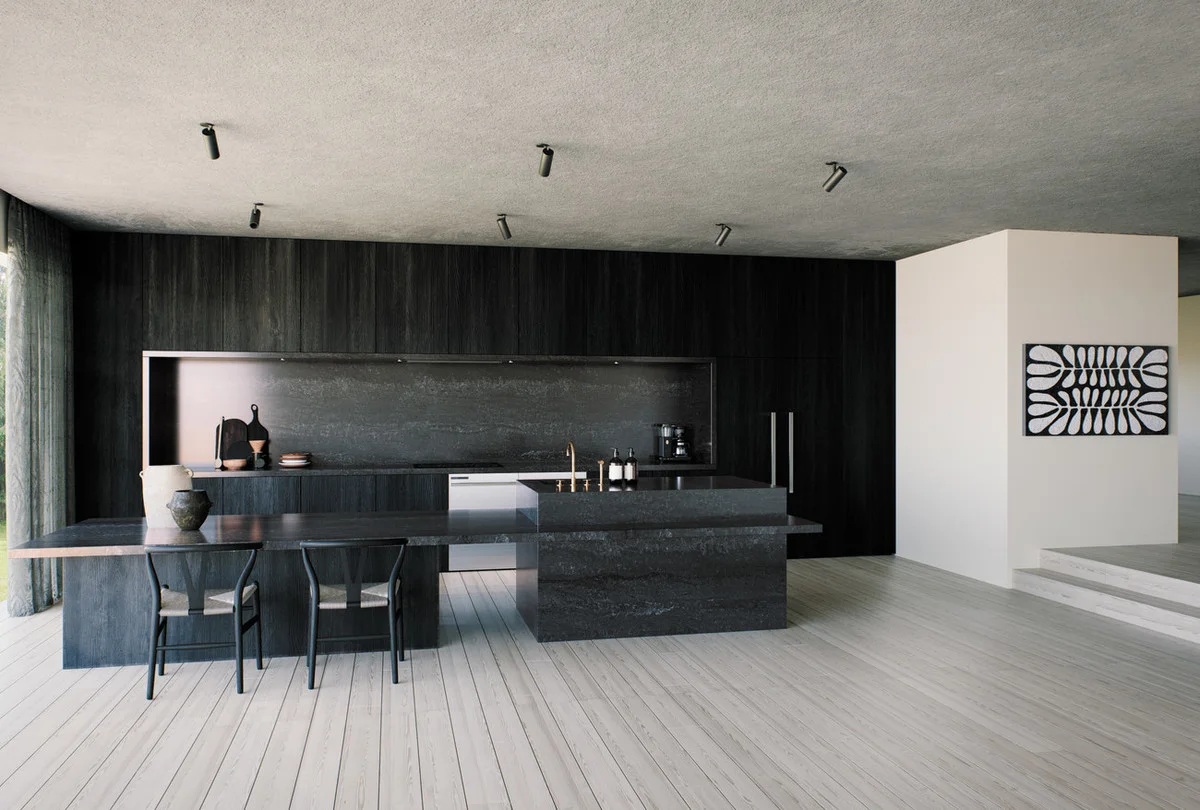
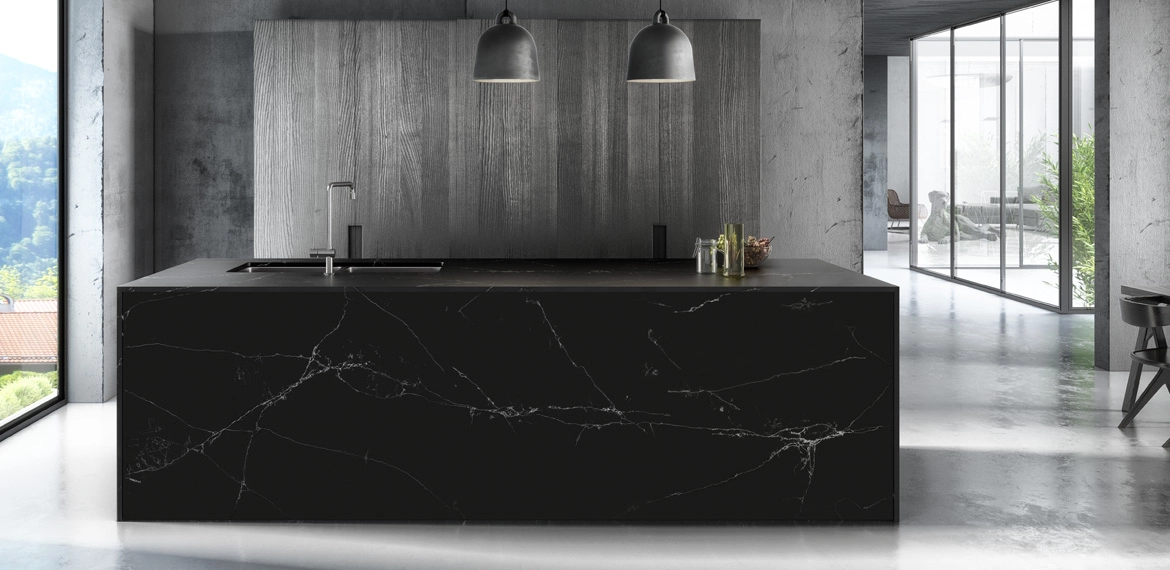
Black and Deep Tones remain a timeless choice for creating sophisticated, high-impact islands . Black marble, soapstone, and dark granite continue to appeal to homeowners seeking sleek, modern aesthetics.
-
Blue-Gray Tones have emerged as a sophisticated alternative to traditional grays . Natural stone slabs with subtle blue undertones, such as blue-gray quartzite and slate blue quartz, create contemporary elegance without feeling cold.
-
Creamy Beige and Warm Neutrals represent a shift away from pure white countertops . Taj Mahal quartzite, with its warm beige tones mixed with soft grays, creates a neutral palette that works seamlessly with virtually any cabinet color, from rich burgundy to sage green or midnight blue .
-
Soft Taupe and Warm Grays add gentle vibrancy to bright kitchen scenes with white cabinetry and warm wood elements . These muted tones provide sophistication while maintaining a calm, serene aesthetic.
Making the Island Actually Work
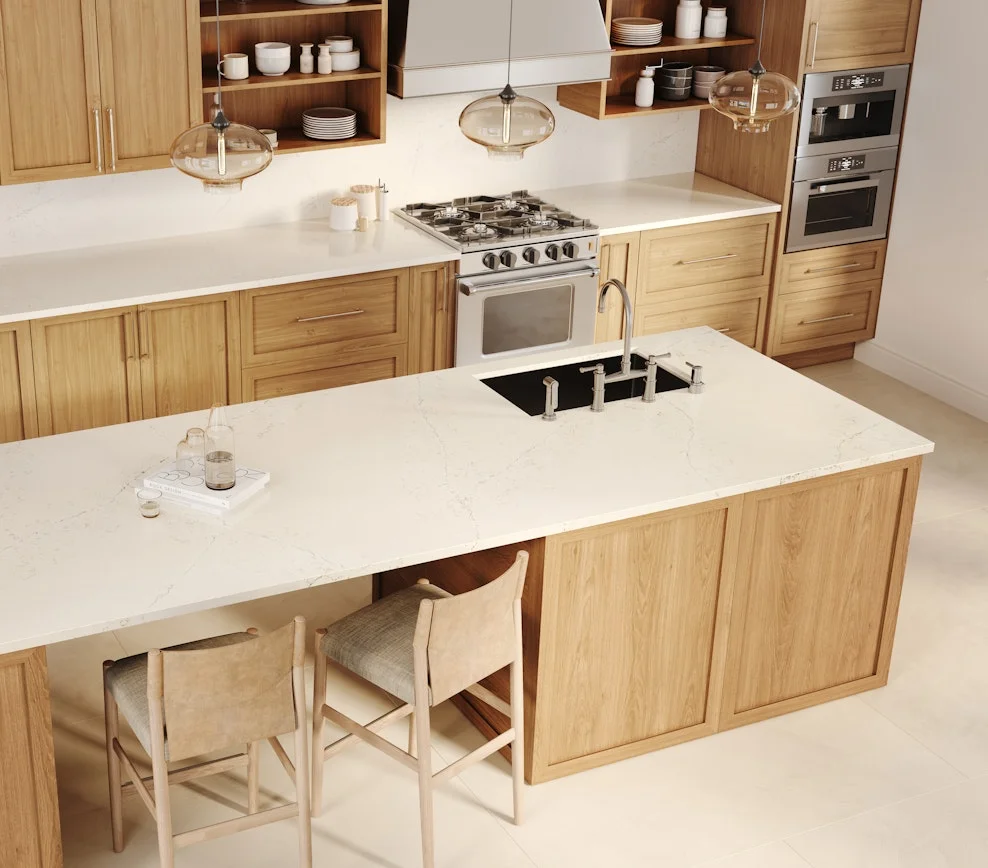
The best kitchen islands balance beauty with functionality. They’re designed to support how you actually live and cook.
Getting Seating Right
If your island includes seating, several design considerations matter. The countertop overhang — the portion extending beyond the base cabinetry — should be approximately 15-18 inches to comfortably accommodate bar stools. Stool height should align with countertop height: typically 24-26 inches for counter-height stools or 30-32 inches for bar-height.
Pendant lighting above the seating area serves practical and aesthetic purposes. It provides task lighting for dining while creating visual interest and ambiance. The lighting also defines the seating zone, making it feel like a distinct area within the larger kitchen.
Storage That Actually Helps
Modern islands maximize storage through thoughtful design. Deep drawers accommodate large cookware and serving pieces. Open shelving on one side creates display opportunities while maintaining visual openness. Specialized storage adds functionality tailored to your cooking style.
Integrating Appliances
Many islands now incorporate appliances and utilities. A prep sink allows vegetable washing and beverage service without leaving the island. A cooktop brings cooking to the center of the kitchen, though this requires ventilation considerations. Microwave drawers, wine refrigerators, and dishwashers can all integrate seamlessly.
Questions People Ask
How do I make my island a focal point?
Choose a countertop material contrasting with your cabinetry. Incorporate distinctive lighting above. Consider a unique color for the island base differing from surrounding cabinetry. Add architectural details like decorative corbels or open shelving. Ensure excellent lighting for both functionality and visual attention.
Can I have both an island and a peninsula?
Yes. Many larger kitchens successfully incorporate both, maximizing functionality and creating distinct zones. Careful layout planning ensures adequate workflow and movement.
Is a kitchen island good for resale value?
Generally, yes. A well-designed island appropriate for your kitchen’s size typically adds value. In competitive real estate markets, a minor kitchen remodel including an island can return more than 100% of investment.
For more ideas on creating a kitchen that works beautifully, explore our guide to kitchen remodeling ideas.
The Island as Heart of Home
A kitchen island is far more than functional addition. It’s a statement about how you live. It’s where your family gathers for breakfast, where guests congregate during parties, where the magic of home cooking happens.
When designing your island, think beyond immediate functional requirements. Consider how the materials, colors, and design elements will make you feel when you’re working there. Think about how your family will actually use the space. Envision the entertaining scenarios that matter most to you.
Our team has helped countless homeowners across California and Texas create islands that are as beautiful as they are functional. Whether you’re drawn to the timeless elegance of grey quartz, the luxury of marble, or the warmth of natural wood, we have the expertise and materials to bring your vision to life.
Ready to start? Schedule a design consultation at our Los Angeles or San Antonio showroom. Let’s create the perfect island for your home.