
You’ve narrowed it down to two options. Both are engineered surfaces. Both are non-porous. Both resist stains and come in beautiful colors. So why does the choice feel so complicated?
Here’s the thing: Dekton and quartz seem similar on the surface, but they’re fundamentally different materials. According to Dekton Mastidek’s comparison guide, the way each material is made determines everything else — durability, heat resistance, UV stability, and ideal applications.
Understanding those differences is crucial to making the right choice for your kitchen. This guide walks you through the technical realities, compares durability across real-world scenarios, breaks down costs, and helps you determine which material fits your specific needs.
How They’re Made Changes Everything
The manufacturing process isn’t just a technical detail. It’s the foundation of every performance difference between these materials.
Dekton: Born from Extreme Conditions
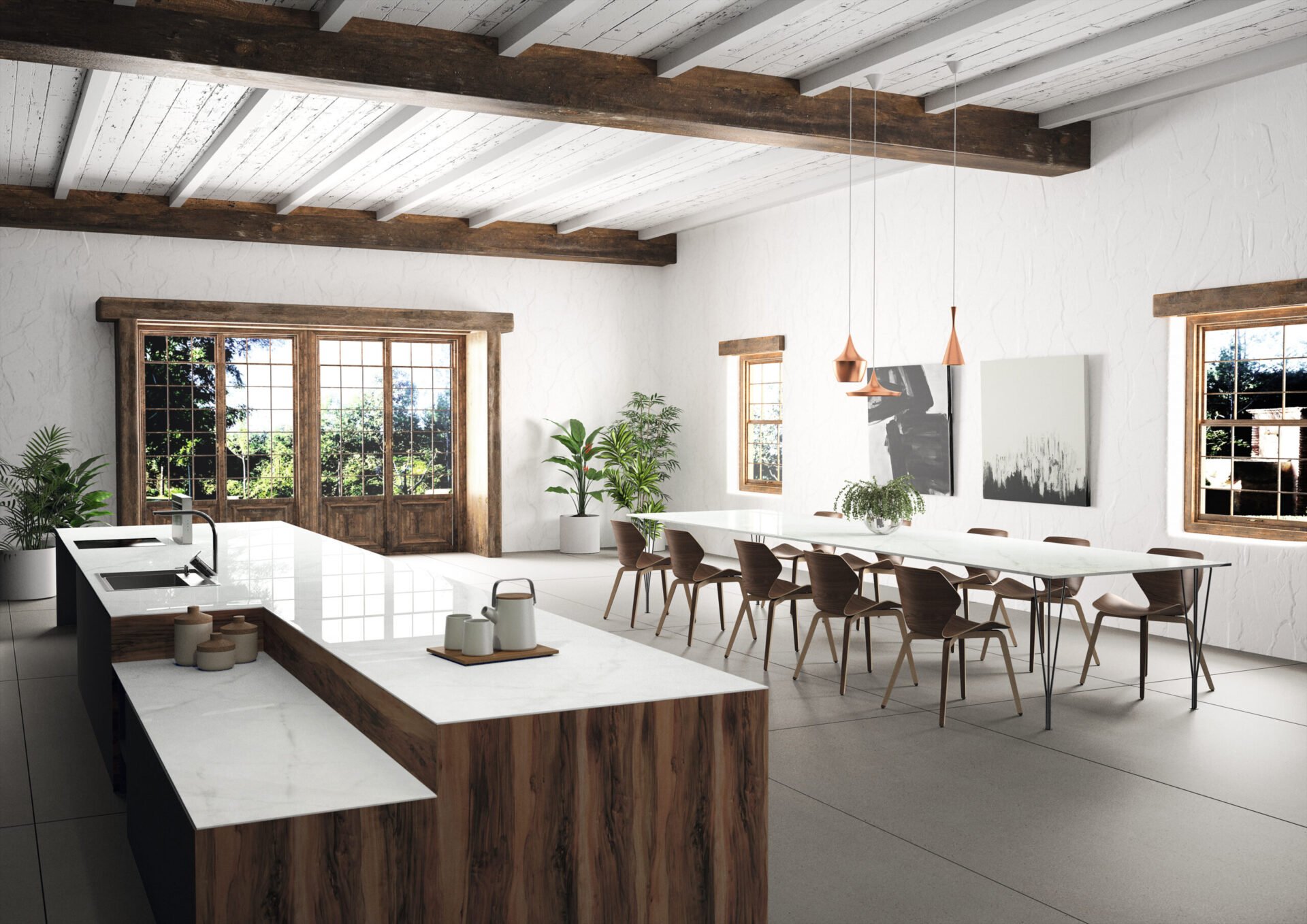
Dekton is classified as an ultra-compact surface or sintered stone, representing an entirely new category of material.
Its composition is strictly mineral, consisting of a sophisticated blend of over 20 natural minerals, including raw materials used in the production of glass, state-of-the-art porcelain, and quartz surfaces.
The crucial difference lies in the total absence of resins or plastic binders. Dekton is manufactured through TSP (Technology of Sinterized Particles), an accelerated version of the metamorphic changes natural stone undergoes over millennia under extreme pressure and temperature.
The TSP process involves compacting the mineral mix with a 25,000-ton press, a force equivalent to 2.5 times the weight of the Eiffel Tower. After this ultra-compaction, the slabs are fused in a sintering kiln at temperatures exceeding. At this point, an atomic fusion reaction occurs, completely eliminating porosity and micro-defects that could cause stress or weak points.
The result is a slab of unprecedented density where aesthetic and functional properties coexist in a solid, stable mineral matrix
Quartz: Engineering with Resin
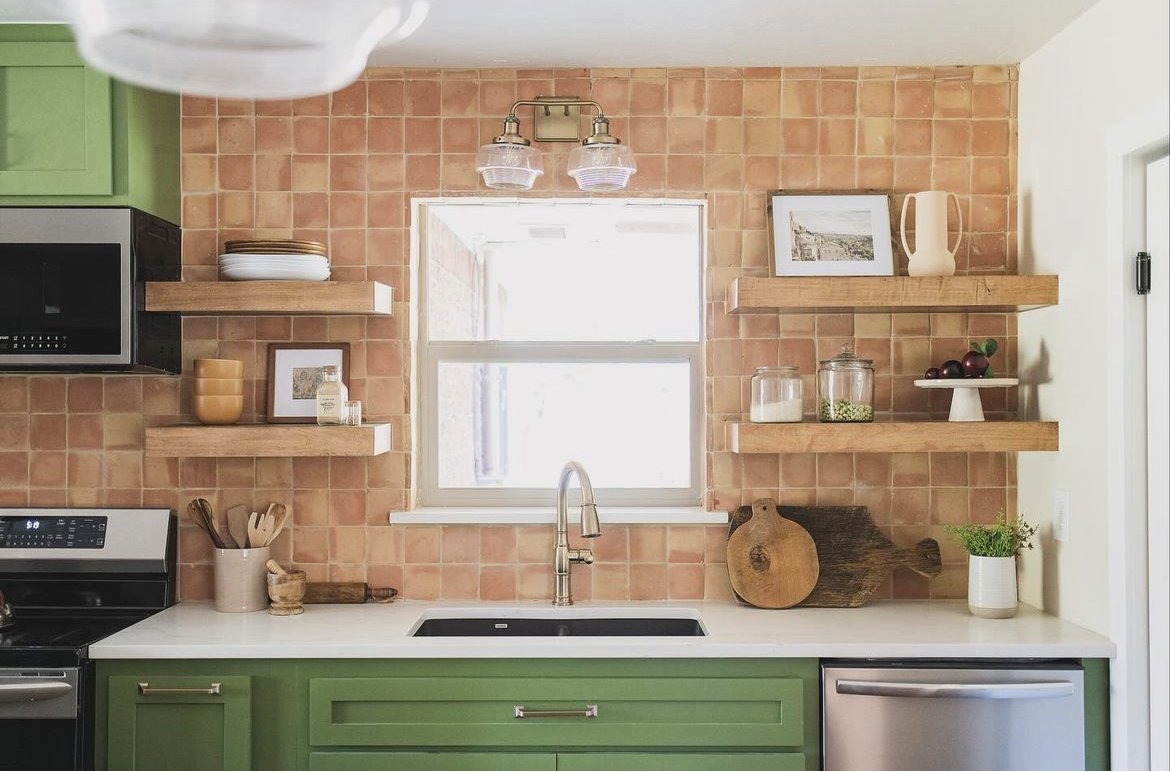
Engineered quartz, which has dominated the residential market for decades, is essentially a composite material.
It consists of approximately 90% to 95% natural quartz crystals mixed with polymer resins (usually polyester) and pigments. These resins act as the binding agent, filling the spaces between minerals and creating a non-porous surface.
The manufacturing process uses vacuum vibro-compression, followed by curing in an oven at moderate temperatures. This curing polymerizes the resin, giving quartz flexibility but also introducing an organic component vulnerable to extreme heat and ultraviolet radiation
Why This Difference Matters
Dekton’s sintering process creates fundamentally different material than quartz’s resin-based engineering.
No resins means Dekton doesn’t degrade under UV exposure the way quartz can. The extreme heat exposure during manufacturing means it withstands extreme temperatures in real-world use. Quartz, while durable, has limitations stemming from its resin content.
This compositional difference cascades through every other property.
| Property | Engineered Quartz | Dekton (Ultra-Compact) |
| Main Composition | 90-95% Natural Quartz | 20+ Natural Minerals |
| Binding Agent | Polymer Resins (Plastics) | None (Fusion by Sintering) |
| Porosity | < 0.05% | Nearly Zero / Null |
| Manufacturing Pressure | Vibro-compression | 25,000 Tons (SPT) |
| UV Resistance | Low (Yellows/Fades) | Exceptional (UV Stable) |
| Heat Resistance | Moderate | High |
| Flexibility | Higher (Resin absorbs impact) | Lower (Rigid/Brittle on edges) |
| Hardness (Mohs Scale) | 6.0 – 7.0 | 7.0 – 8.0 |
Durability: Where Each Material Excels
Both Dekton and quartz perform exceptionally well compared to traditional materials like laminate or granite. But they excel in different ways.
Scratch Resistance
According to AMC Countertops’ durability analysis, Dekton is significantly harder than quartz. So scratch-resistant that you can cut vegetables directly on the surface without damaging it.
Quartz is also scratch-resistant, but not quite at Dekton’s level. Most manufacturers recommend using cutting boards on quartz to preserve the surface long-term.
Winner: Dekton
Heat Resistance
This is where Dekton truly shines. According to Zicana Boutique’s cost and performance guide, Dekton withstands temperatures up to 1000°F without damage. You can place a hot pot directly from the stove onto Dekton without using a trivet. No damage. No discoloration.
Quartz is heat-resistant but not heat-proof. Temperatures above 300°F can cause discoloration or weaken the resin binders. A pot fresh from the stove can damage quartz.
For busy kitchens and serious cooks, this is a significant practical consideration.
Winner: Dekton
Stain Resistance
Both materials are non-porous, meaning both resist staining extremely well. Coffee, wine, lemon juice — substances that would stain porous materials like granite simply sit on the surface. With prompt cleaning, neither material stains permanently.
Winner: Tie
UV Stability
Critical difference for anyone considering outdoor applications: Dekton is 100% UV stable. It won’t discolor, fade, or degrade when exposed to direct sunlight, even over decades.
Quartz can discolor with prolonged sun exposure. The resin binders degrade under intense UV radiation, causing surfaces to yellow or fade over time. While some engineered quartz brands have developed outdoor-rated products, they don’t perform as well as Dekton in demanding conditions.
Winner: Dekton
Quartz and Dekton Costs
For US homeowners and developers, cost analysis extends beyond the price per square foot. Dekton generally sits at the high end of the price spectrum due to fabrication complexity and slab logistics.
Installed Cost Comparison (USA – 2025-2026)
-
Engineered Quartz: $50 to $120 per square foot installed.
-
Dekton: $60 to $150 per square foot installed (High-end lines can reach $180).
While quartz can reduce total project costs by 10% to 25% in the construction phase, Dekton offers superior ROI in specific applications. Dekton’s ability to resist severe use without repairs justifies the initial premium. Furthermore, Cosentino’s 25-year warranty for Dekton (when installed by certified professionals) provides long-term peace of mind that quartz
Dekton vs Quatz Maintenance
Good news: both materials are virtually maintenance-free.
Dekton Care
Simple cleaning with water and mild soap. You can use common kitchen cleaning products, as long as you rinse thoroughly. Avoid products containing hydrofluoric acid. No sealing required — ever. The non-porous nature means there’s nothing to seal.
Quartz Care
Equally low-maintenance. Clean with water and mild soap. Avoid harsh chemicals. No sealing required.
Winner: Tie — both are among the easiest countertops to maintain.
Outdoor Applications
Dekton: The Clear Winner
Dekton is ideal for outdoor kitchens. 100% UV stability means no fading or discoloring in direct sunlight. Heat resistance handles outdoor grills. Non-porous nature means weather won’t degrade it.
Quartz
While some manufacturers offer outdoor-rated quartz, performance degrades over time in outdoor environments. UV exposure causes discoloration.
For outdoor kitchens, Dekton is the superior choice.
When to Choose Each Material
Choose Dekton If:
-
You want maximum durability and scratch resistance
-
You’re planning an outdoor kitchen or exterior application
-
You want extreme heat resistance (no trivets needed)
-
You want UV stability and fade-proof color
-
You want large-format seamless designs
-
You’re willing to pay premium for superior performance
Choose Quartz If:
-
You want more color and pattern options
-
You want easier, less expensive installation
-
You’re designing an indoor kitchen only
-
You want lower initial cost
Questions People Ask
Which is more durable?
Dekton is harder and more scratch-resistant. Quartz is more forgiving of impact and chipping. For most applications, Dekton’s durability is superior.
Can you use Dekton outdoors?
Absolutely. Dekton is ideal for outdoor kitchens. Its UV stability and heat resistance make it perfect for exterior applications.
Is Dekton better than quartz for kitchens?
Depends on your priorities. Dekton is better for heat resistance, durability, and outdoor use. Quartz is better for design options and cost.
Can I use both materials in the same project?
Yes. Many designers use Dekton for exterior applications and quartz for interior countertops. This combination optimizes performance for each environment.
Making Your Choice
The choice between Dekton and quartz isn’t about which material is objectively “better” — it’s about which is better for your specific needs.
At Elements Room, we work with both Dekton and quartz to create spaces that balance beauty, performance, and budget.
Explore our collection of Dekton and quartz materials to see both options side-by-side. Schedule a consultation with our team to discuss which material aligns with your vision.
The perfect countertop is waiting. Let’s find it together.